How Live Webinar Training Expands Access to Industry Expertise
Industrial refrigeration facilities depend heavily on knowledgeable personnel to maintain safe operations, support mechanical integrity, respond to emergencies, and navigate increasingly complex regulatory requirements. However, accessing experienced refrigeration instructors has traditionally been difficult for many organizations, especially facilities located in remote areas or operating under tight staffing and budget constraints.
Historically, obtaining high-level industrial refrigeration training often required expensive travel, extended employee absences, or onsite instructor visits that disrupted operations for several days. Today, live webinar training has transformed how facilities access industry expertise by delivering practical, real-time instruction directly to employees regardless of location.
Modern webinar-based education allows refrigeration teams to receive expert-led training more consistently, efficiently, and affordably than ever before. As workforce development challenges continue growing across the industry, live webinar training has become an essential tool for expanding access to valuable operational knowledge and process safety expertise.
Geographic Limitations No Longer Restrict Training Opportunities
Many industrial refrigeration facilities operate far from major training centers or large metropolitan areas. Facilities in rural or remote regions often struggle to access instructors with deep expertise involving:
- Ammonia refrigeration systems
- OSHA Process Safety Management (PSM)
- EPA Risk Management Program (RMP) requirements
- Mechanical integrity
- Emergency preparedness
- IIAR standards
- Refrigeration troubleshooting
Traveling employees to distant training events creates operational challenges involving:
- Staffing shortages
- Production disruptions
- Travel expenses
- Scheduling conflicts
- Lost maintenance time
Live webinar training eliminates many of these obstacles by bringing experienced instructors directly to the facility through online platforms.
Employees can participate from:
- Engine rooms
- Maintenance offices
- Conference rooms
- Multiple facility locations simultaneously
This accessibility allows organizations to provide high-quality refrigeration education without the logistical burden associated with traditional travel-based training programs.
Facilities Can Train Entire Teams More Efficiently
Traditional in-person training often limits participation due to cost and scheduling constraints. Facilities may send only a few employees to outside training events while other personnel receive little or no advanced instruction.
Live webinars make it far easier to train:
- Operators
- Maintenance personnel
- Supervisors
- Safety managers
- Engineers
- Multiple shifts simultaneously
Because webinar delivery removes travel costs and reduces scheduling disruption, facilities can often expand training access across the entire organization rather than limiting education to select individuals.
This broader workforce participation improves:
- Operational consistency
- Communication
- Emergency preparedness
- Mechanical integrity awareness
- Overall safety culture
When all employees receive consistent instruction, facilities build stronger alignment regarding operational expectations and safety practices.
Real-Time Interaction Improves Learning
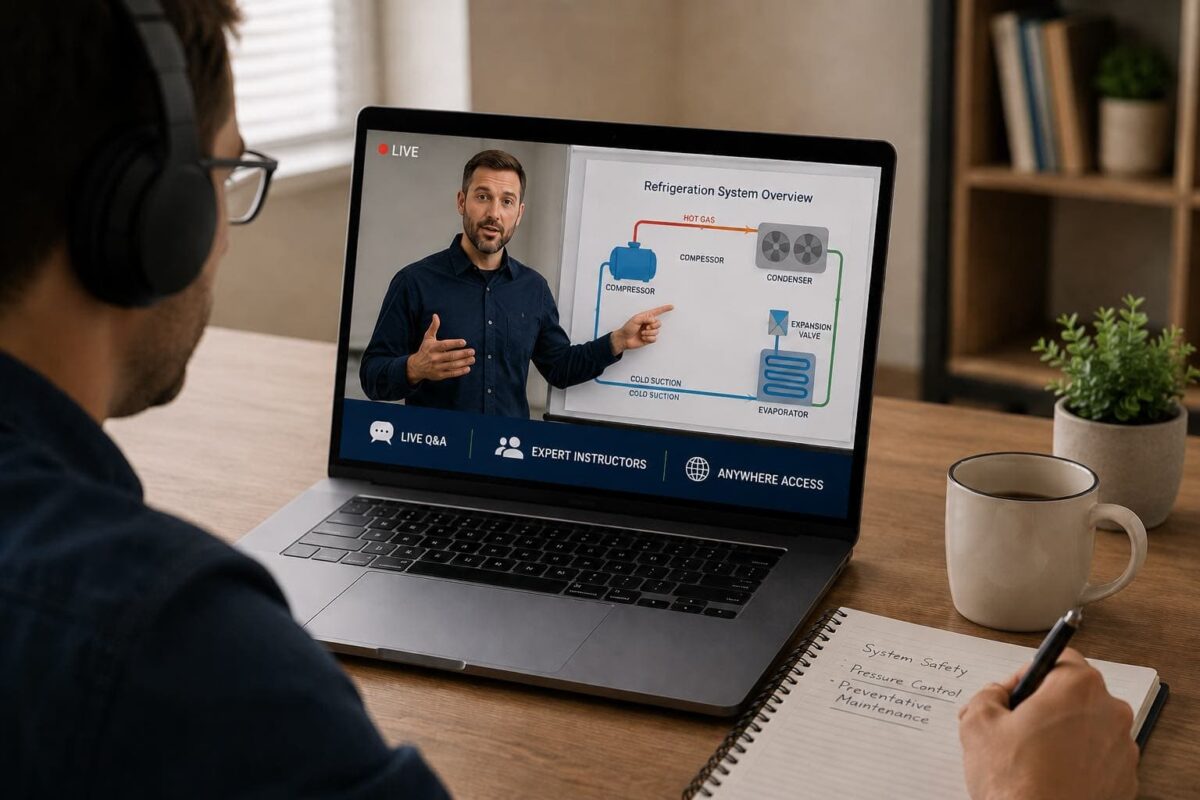
One common misconception about online learning is that it feels passive or disconnected. However, modern live webinar platforms provide highly interactive learning environments that encourage active participation.
During live refrigeration webinars, employees can:
- Ask questions in real time
- Participate in discussions
- Review operational scenarios
- Engage in troubleshooting exercises
- Analyze case studies
- Collaborate during scenario-based learning
Experienced instructors can immediately address:
- Equipment-specific concerns
- Operational challenges
- Regulatory questions
- Mechanical integrity issues
- Emergency preparedness topics
This interaction helps employees better connect training concepts to their actual facility operations.
Live engagement also improves knowledge retention because employees remain actively involved throughout the learning process rather than passively reviewing prerecorded material.
Experienced Instructors Become Accessible Nationwide
Industrial refrigeration expertise is highly specialized. Many of the industry’s most experienced professionals possess decades of practical field experience involving:
- Ammonia refrigeration operations
- Emergency response
- PSM implementation
- Incident investigations
- Mechanical integrity programs
- Regulatory inspections
- System troubleshooting
Without webinar technology, access to these instructors may be limited by geography or scheduling availability.
Live webinar training allows facilities nationwide to learn directly from experienced refrigeration professionals without requiring onsite visits.
This expanded access helps organizations benefit from:
- Real-world operational insight
- Practical troubleshooting lessons
- Industry best practices
- Emergency response experience
- Regulatory interpretation guidance
Facilities can receive high-level instruction from recognized industry experts regardless of physical location.
Flexible Scheduling Supports Modern Operations
Industrial refrigeration facilities often operate 24/7 under demanding production schedules. Coordinating travel-based training for multiple employees can create operational strain and staffing challenges.
Live webinar training offers far greater scheduling flexibility.
Facilities can often:
- Schedule shorter focused sessions
- Train multiple shifts separately
- Minimize operational disruption
- Coordinate training around maintenance windows
- Reduce employee downtime
This flexibility makes ongoing workforce development more practical and sustainable for facilities managing continuous operations.
Additionally, webinar-based instruction allows organizations to provide more frequent refresher training without requiring large-scale travel coordination.
Webinar Training Supports Continuous Education
Refrigeration systems, regulations, and industry standards continue evolving rapidly. Facilities must keep employees current regarding:
- OSHA PSM requirements
- EPA expectations
- IIAR updates
- Mechanical integrity practices
- Emergency response procedures
- Refrigeration technology advancements
Live webinars make continuous education more accessible by allowing facilities to schedule ongoing training throughout the year.
Rather than relying solely on occasional large conferences or infrequent in-person events, organizations can provide:
- Regular refresher sessions
- Targeted technical updates
- Compliance reviews
- Scenario-based discussions
- Mechanical integrity training
This continuous learning approach helps maintain workforce competency while reducing knowledge gaps over time.
Emergency Preparedness Training Becomes Easier to Deliver
Emergency response readiness requires regular reinforcement and discussion.
Live webinar platforms provide effective opportunities to review:
- Alarm response procedures
- Evacuation coordination
- Shutdown protocols
- Incident command structure
- Communication expectations
- Ammonia release scenarios
Interactive discussions and scenario analysis allow employees to strengthen emergency preparedness even when full-scale drills may not be practical regularly.
Facilities that consistently reinforce emergency response expectations often improve:
- Response confidence
- Communication
- Situational awareness
- Decision-making during incidents
Webinar-based emergency training helps organizations maintain preparedness across geographically distributed teams more efficiently.
Cost Savings Allow Greater Workforce Investment
Traditional travel-based training often includes significant expenses involving:
- Airfare
- Hotels
- Meals
- Transportation
- Overtime coverage
- Lost production time
These costs may limit how frequently facilities provide workforce education.
Live webinar training significantly reduces these expenses while still delivering access to experienced instruction.
As a result, organizations can often:
- Train larger groups
- Increase training frequency
- Expand workforce participation
- Invest in additional educational topics
This affordability helps facilities strengthen long-term workforce development efforts while maintaining operational budgets more effectively.
Webinar Training Strengthens Compliance Efforts
OSHA and EPA regulations emphasize employee competency as a critical component of refrigeration safety.
Live webinar training helps facilities maintain stronger compliance performance by supporting:
- Consistent operator education
- Refresher training documentation
- Emergency preparedness discussions
- Mechanical integrity awareness
- Process safety understanding
Digital platforms also simplify training record management by automatically tracking:
- Attendance
- Participation
- Session completion
- Training history
This organized documentation helps facilities demonstrate ongoing workforce development during audits and inspections.
Expanding Access to Expertise Strengthens the Entire Industry
The refrigeration industry faces increasing workforce development challenges as experienced professionals retire and newer employees enter the field with limited ammonia refrigeration exposure.
Live webinar training helps address these challenges by expanding access to:
- Industry expertise
- Practical operational knowledge
- Real-world troubleshooting experience
- Process safety education
- Regulatory guidance
Facilities that invest in accessible, ongoing workforce education often build:
- Stronger operators
- Better communication
- Improved emergency preparedness
- Greater operational consistency
- More resilient safety cultures
Most importantly, webinar-based education helps ensure valuable industry knowledge remains available to refrigeration professionals nationwide regardless of location or facility size.
As industrial refrigeration systems continue evolving and operational demands increase, organizations cannot afford limited access to expert instruction.
Live webinar training has become one of the most effective ways to connect refrigeration teams with the knowledge, experience, and practical guidance necessary to operate safely and confidently in today’s increasingly complex industrial environments.