Building a Stronger Refrigeration Workforce Through Expert Training Programs
Industrial refrigeration facilities rely on skilled operators, technicians, supervisors, and maintenance personnel to maintain safe and reliable operations every day. These teams manage complex ammonia refrigeration systems, monitor critical equipment, respond to emergencies, support mechanical integrity programs, and help facilities comply with evolving OSHA and EPA requirements.
However, the refrigeration industry is facing increasing workforce challenges. Many experienced operators are approaching retirement, newer employees often enter the field with limited industrial refrigeration experience, and modern systems continue growing more advanced and technically demanding.
In this environment, facilities can no longer rely solely on informal knowledge transfer or minimal compliance-oriented instruction. Building a stronger refrigeration workforce now requires structured, expert-led training programs that develop practical skills, operational confidence, and long-term technical competency.
Facilities that invest in high-quality training programs consistently strengthen safety performance, improve operational reliability, and prepare their workforce for the future of industrial refrigeration.
The Refrigeration Industry Faces a Workforce Transition
For decades, industrial refrigeration operations depended heavily on experienced personnel who developed deep technical understanding through years of hands-on field experience.
These individuals often possessed extensive knowledge involving:
- Refrigeration troubleshooting
- Emergency response
- Compressor operation
- Mechanical integrity
- Process safety management
- Operational decision-making
- System-specific equipment behavior
As many of these experienced professionals retire, facilities risk losing valuable institutional knowledge that directly affects safety and reliability.
At the same time, many newer employees entering industrial environments may have:
- Limited ammonia refrigeration exposure
- Minimal engine room experience
- Little familiarity with OSHA PSM requirements
- Limited troubleshooting experience
This growing knowledge gap increases the importance of expert training significantly.
Expert Training Accelerates Workforce Development
Building refrigeration competency takes time, but expert-led training programs help employees develop skills more efficiently by providing practical operational insight from experienced refrigeration professionals.
Expert instructors help employees understand:
- How refrigeration systems behave under real conditions
- Why equipment failures occur
- How incidents develop
- What warning signs operators should recognize
- How emergency situations unfold
Instead of relying solely on theoretical instruction, experienced trainers connect technical concepts directly to actual operational scenarios.
This practical perspective helps employees:
- Build confidence faster
- Improve troubleshooting ability
- Strengthen situational awareness
- Understand process safety more thoroughly
As a result, facilities often develop capable operators more quickly while improving long-term workforce competency.
Hands-On Learning Strengthens Operational Understanding
Industrial refrigeration is a highly practical industry. Operators must interact directly with compressors, vessels, valves, controls, and emergency systems while managing constantly changing operating conditions.
Hands-on training helps employees:
- Observe system behavior
- Practice troubleshooting
- Understand equipment operation
- Review emergency procedures
- Build mechanical integrity awareness
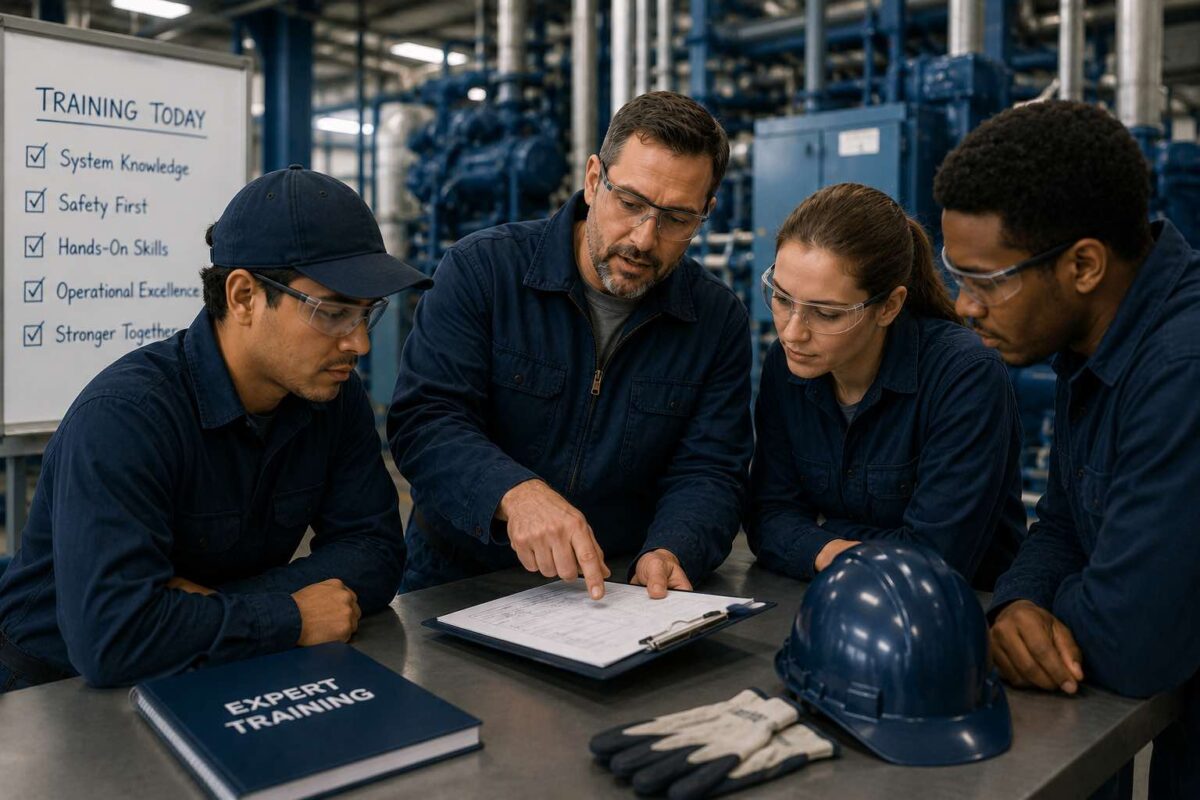
Practical learning environments allow employees to apply technical concepts directly to real equipment and operational scenarios.
This active participation improves:
- Knowledge retention
- Operational confidence
- Emergency preparedness
- Equipment familiarity
Facilities that incorporate hands-on instruction into training programs often build stronger and more capable refrigeration teams over time.
Strong Training Programs Improve Safety Performance
Expert training programs directly support refrigeration safety by helping employees understand:
- Process hazards
- Safe operating procedures
- Alarm response expectations
- Emergency shutdown procedures
- Safe work practices
- Mechanical integrity principles
Well-trained employees are more likely to:
- Recognize abnormal conditions early
- Follow procedures consistently
- Report concerns promptly
- Communicate effectively
- Respond calmly during emergencies
This operational awareness helps reduce human error risks while strengthening overall process safety performance throughout the facility.
As workforce competency improves, facilities often experience:
- Fewer operational incidents
- Improved emergency response
- Stronger compliance performance
- Better operational consistency
Mechanical Integrity Programs Become Stronger
Mechanical integrity remains one of the most important components of refrigeration system reliability and OSHA Process Safety Management (PSM) compliance.
Expert training programs help employees recognize:
- Corrosion concerns
- Pressure irregularities
- Vibration abnormalities
- Oil management problems
- Equipment wear patterns
- Sensor calibration issues
Experienced instructors often share real-world examples of how small deficiencies can escalate into major operational failures when left unaddressed.
This practical understanding improves:
- Inspection consistency
- Preventive maintenance effectiveness
- Deficiency reporting
- Corrective action follow-up
Facilities with knowledgeable employees often identify mechanical integrity concerns earlier, helping reduce unexpected downtime and equipment failures.
Emergency Preparedness Improves Through Practical Instruction
Emergency response situations involving ammonia refrigeration systems require confident, informed decision-making under pressure.
Operators may need to:
- Initiate shutdown procedures
- Isolate equipment safely
- Coordinate evacuations
- Communicate with emergency responders
- Assess changing system conditions
Expert training programs improve emergency preparedness through:
- Scenario-based exercises
- Alarm response discussions
- Emergency shutdown reviews
- Incident case studies
- Communication drills
These practical exercises help employees develop confidence before real emergencies occur.
Facilities with strong emergency training programs often demonstrate:
- Faster response times
- Better communication
- Improved situational awareness
- Reduced confusion during incidents
Workforce Confidence Improves Daily Operations
Technical confidence plays a major role in operational performance.
Employees who understand refrigeration systems thoroughly are generally more comfortable:
- Asking questions
- Reporting concerns
- Participating in troubleshooting
- Communicating during emergencies
- Following procedures consistently
Expert training helps employees build confidence by helping them understand not only what procedures require, but also why those procedures matter under real operating conditions.
Confident employees often contribute more actively to:
- Safety discussions
- Operational improvements
- Preventive maintenance efforts
- Process safety initiatives
This engagement strengthens the entire refrigeration operation over time.
Continuous Education Supports Long-Term Success
Industrial refrigeration systems, regulations, and technologies continue evolving rapidly.
Expert training programs help facilities maintain long-term workforce competency through ongoing education involving:
- OSHA PSM updates
- EPA requirements
- IIAR standards
- Mechanical integrity practices
- Refrigeration technology advancements
- Emergency preparedness
Continuous learning helps employees remain current while preventing operational complacency.
Facilities that prioritize ongoing workforce development often build stronger long-term safety cultures because employees remain actively engaged in learning and operational improvement.
Flexible Training Solutions Improve Accessibility
Modern facilities often face operational demands that make traditional classroom training difficult to coordinate.
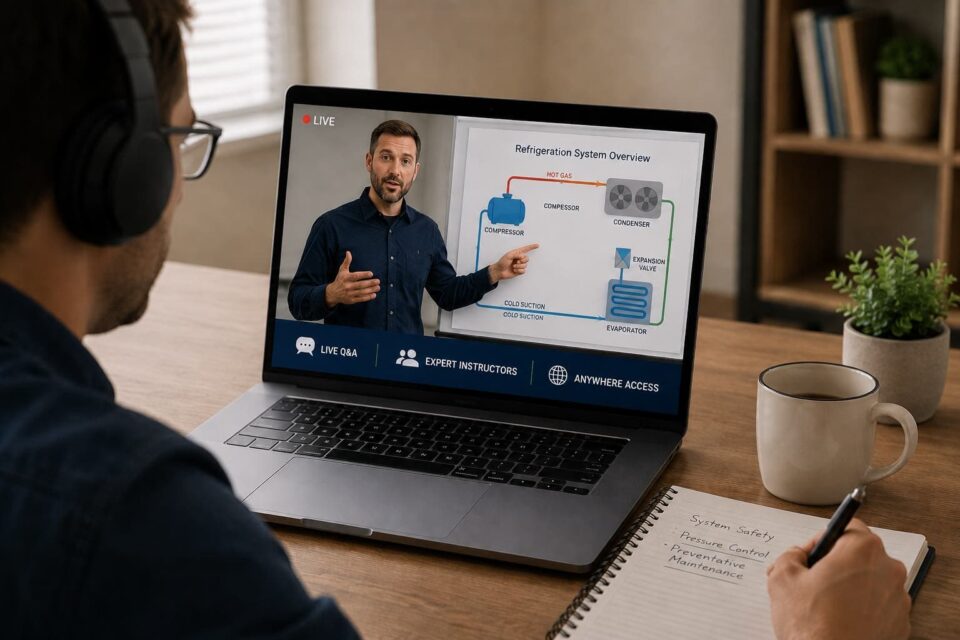
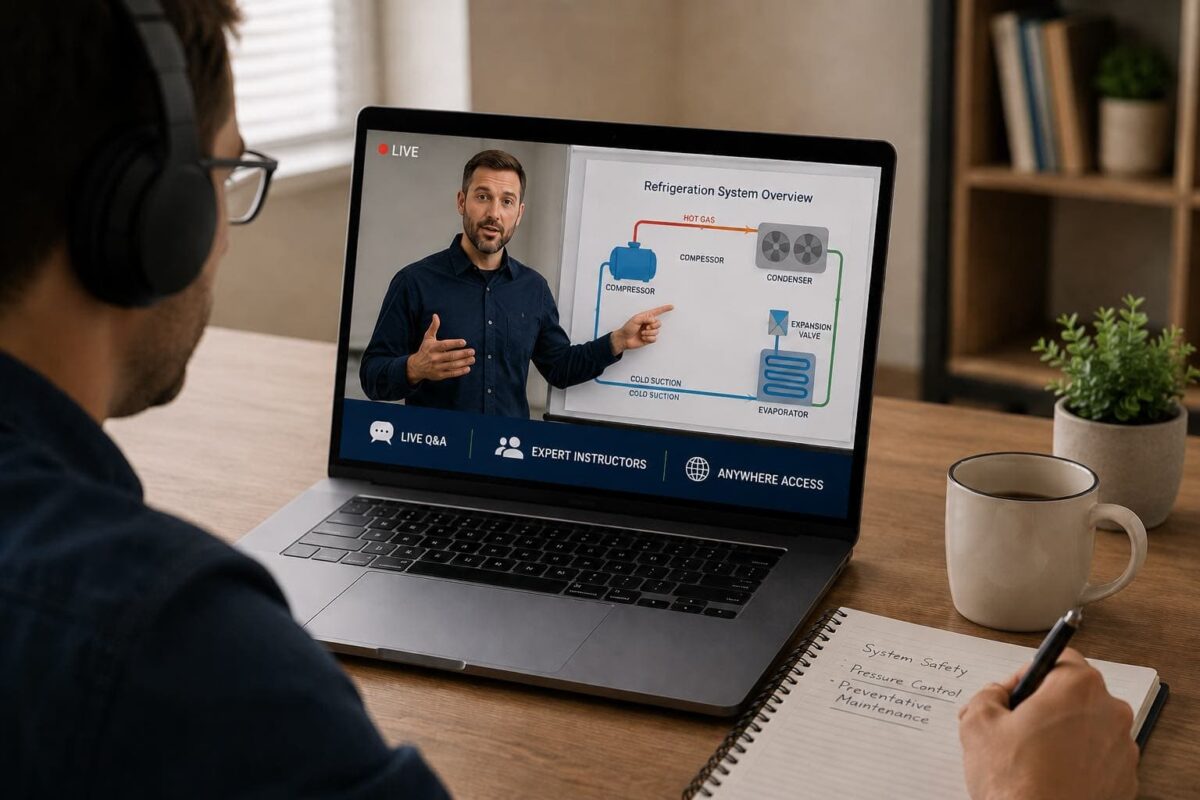
Fortunately, expert instruction can now be delivered through:
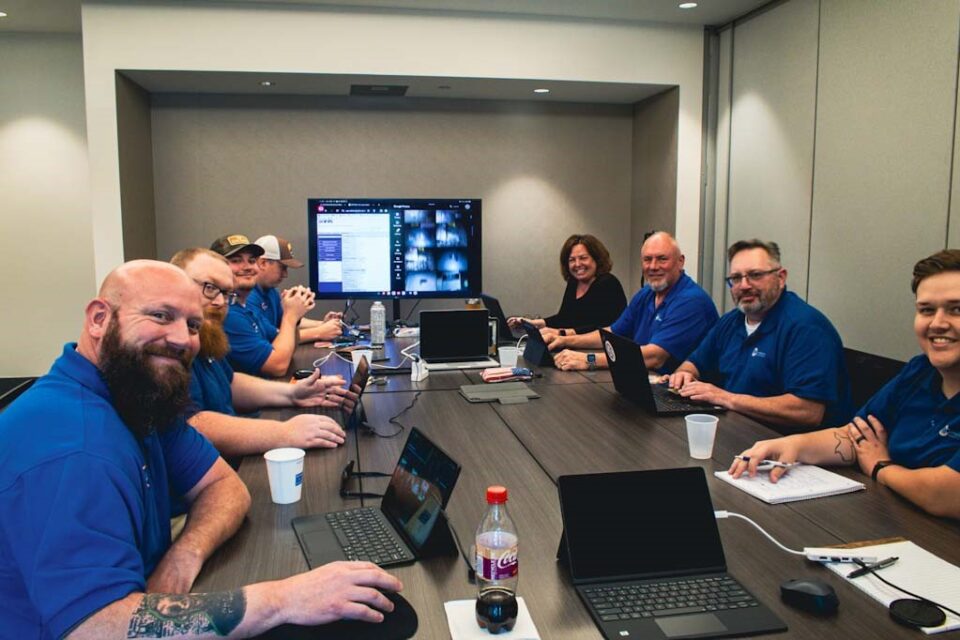
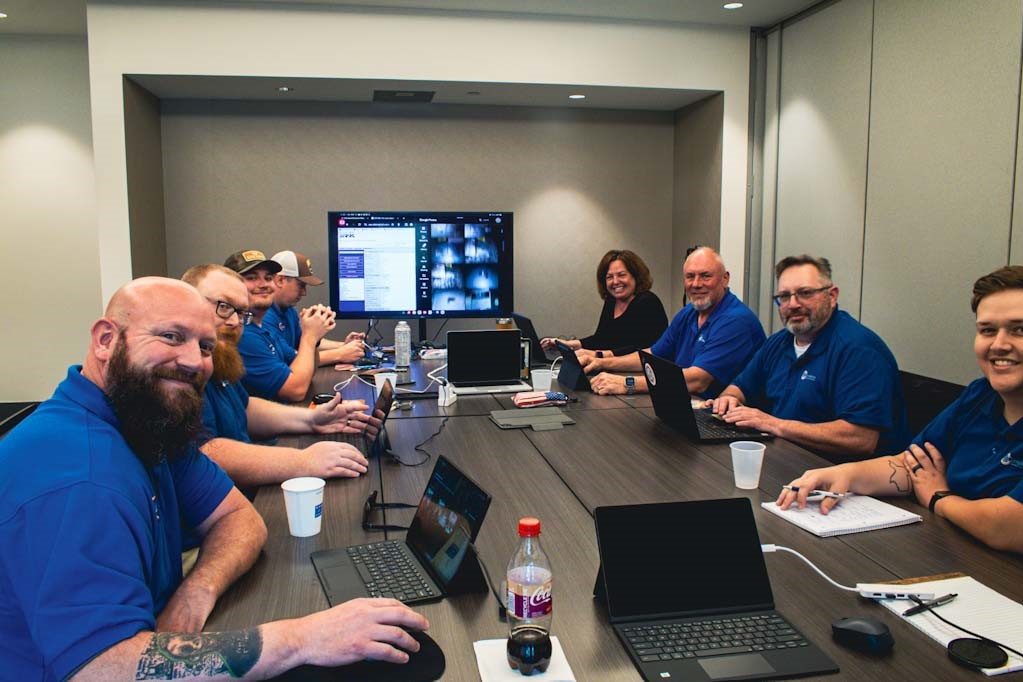
- Onsite training
- Live webinars
- Interactive virtual learning
- Scenario-based workshops
- Hands-on field exercises
These flexible options help facilities provide consistent workforce development without major operational disruption.
More importantly, they allow organizations to train:
- Multiple shifts
- Multiple locations
- Entire departments simultaneously
This expanded accessibility helps strengthen operational consistency across the organization.
Leadership Support Is Essential
Successful workforce development programs require active leadership involvement.
Facilities that build strong refrigeration teams often prioritize:
- Continuous education
- Mentorship
- Practical learning opportunities
- Workforce engagement
- Long-term employee development
Leaders who support training initiatives help create environments where employees feel encouraged to improve skills and contribute to operational excellence.
This investment reinforces both safety culture and long-term organizational resilience.
Stronger Workforces Create Stronger Refrigeration Operations
Industrial refrigeration systems depend heavily on knowledgeable employees capable of making sound operational decisions every day.
Expert training programs strengthen refrigeration workforces by improving:
- Technical competency
- Emergency preparedness
- Mechanical integrity awareness
- Communication
- Troubleshooting ability
- Operational confidence
- Process safety understanding
Most importantly, strong training programs help facilities build teams prepared to manage increasingly complex refrigeration systems safely and reliably under real-world operating conditions.
As the refrigeration industry continues evolving and workforce transitions accelerate, organizations cannot afford to rely on outdated or minimal training approaches.
The facilities best prepared for the future will be the ones investing today in the growth, development, and long-term success of their refrigeration workforce.