Why Refrigeration Facilities Should Prioritize Professional Development
Industrial refrigeration facilities operate in highly demanding environments where safety, reliability, technical expertise, and operational discipline all play critical roles in long-term success. Operators and maintenance personnel manage complex ammonia refrigeration systems, high-pressure equipment, evolving regulations, and emergency response responsibilities while supporting continuous production demands every day.
In this environment, workforce competency cannot remain static.
Facilities that prioritize professional development consistently build stronger teams, improve safety performance, reduce operational risk, and strengthen long-term system reliability. Meanwhile, organizations that neglect employee growth often struggle with workforce instability, communication gaps, inconsistent operations, and preventable operational failures.
As the refrigeration industry continues evolving and workforce transitions accelerate, professional development has become one of the most important long-term investments refrigeration facilities can make.
The Refrigeration Industry Is Becoming More Complex
Modern industrial refrigeration systems are far more advanced than many facilities operated even a decade ago.
Today’s refrigeration teams often work with:
- Advanced automation systems
- Sophisticated controls
- Remote monitoring technology
- Variable frequency drives
- Updated IIAR standards
- Expanded PSM requirements
- Enhanced emergency response expectations
- Increasing mechanical integrity demands
As systems become more interconnected and technically demanding, employees must continuously develop new skills and operational understanding.
Professional development helps personnel stay current regarding:
- Refrigeration technology
- Regulatory updates
- Safety procedures
- Troubleshooting techniques
- Industry best practices
Facilities that invest in workforce growth position themselves more effectively for future operational and regulatory challenges.
Workforce Development Improves Safety Performance
Industrial ammonia refrigeration systems require employees to make accurate operational decisions under changing conditions every day.
Professional development strengthens workforce competency by improving:
- Hazard recognition
- Situational awareness
- Emergency preparedness
- Mechanical integrity understanding
- Communication
- Troubleshooting ability
- Process safety knowledge
Employees who understand refrigeration systems more thoroughly are generally better equipped to:
- Identify abnormal conditions
- Follow procedures consistently
- Respond effectively during emergencies
- Report concerns early
- Support preventive maintenance efforts
This operational awareness helps reduce human error risks while strengthening overall process safety performance throughout the facility.
Professional Development Supports Mechanical Integrity
Mechanical integrity remains one of the most important components of refrigeration safety and system reliability.
Strong professional development programs help employees recognize:
- Corrosion concerns
- Pressure irregularities
- Vibration abnormalities
- Oil management issues
- Sensor calibration problems
- Equipment wear patterns
As workforce technical understanding improves, facilities often strengthen:
- Preventive maintenance programs
- Inspection consistency
- Deficiency reporting
- Corrective action follow-up
- Equipment reliability
Well-trained employees become more proactive in identifying and addressing small mechanical concerns before they escalate into larger failures.
This proactive approach helps reduce:
- Unplanned downtime
- Emergency repairs
- Equipment damage
- Operational disruption
over the long term.
The Industry Faces a Growing Workforce Gap
One of the greatest challenges facing industrial refrigeration today involves workforce transition.
Many highly experienced refrigeration professionals are approaching retirement, taking decades of practical operational knowledge with them.
Without structured professional development efforts, facilities risk losing valuable expertise involving:
- Troubleshooting
- Emergency response
- Operational best practices
- Mechanical integrity awareness
- System-specific knowledge
- Process safety management
At the same time, many newer employees enter industrial refrigeration environments with limited ammonia refrigeration experience.
Professional development programs help bridge this gap by supporting:
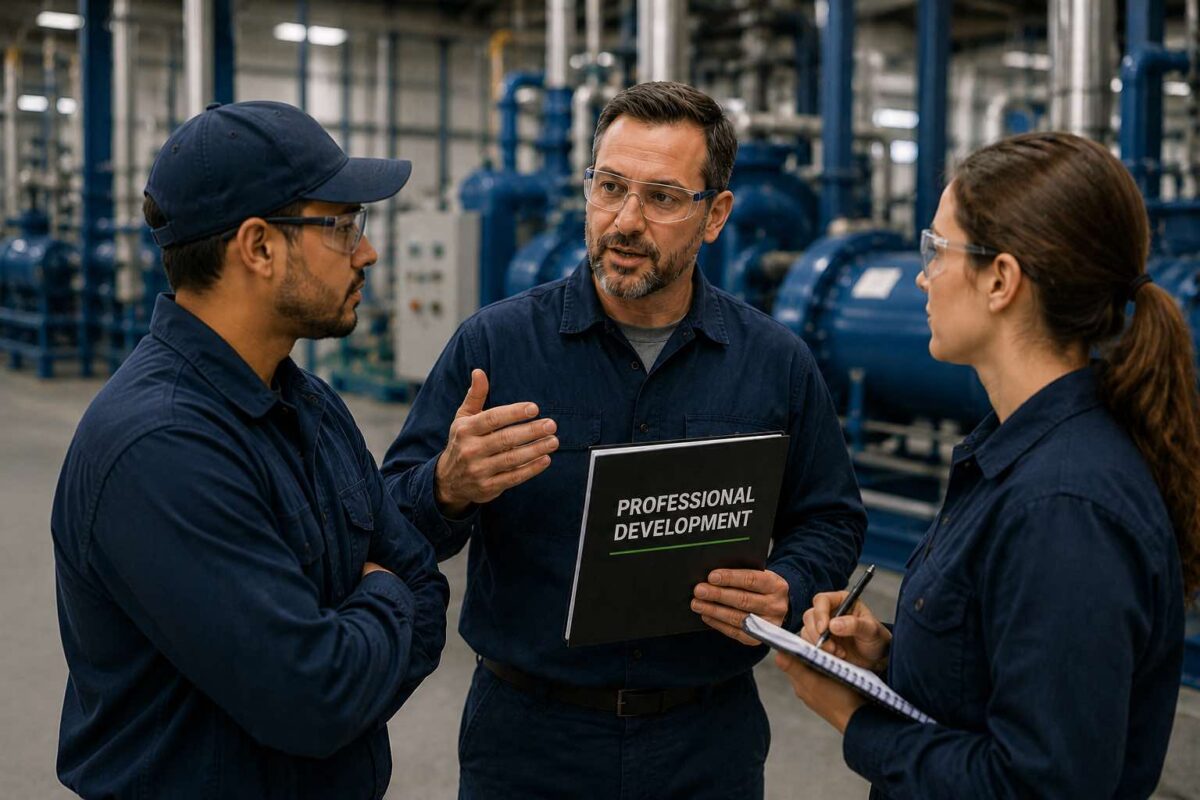
- Mentorship opportunities
- Hands-on training
- Continuous education
- Skill development
- Knowledge transfer
Facilities that actively invest in employee growth help preserve critical operational knowledge while preparing the next generation of refrigeration professionals.
Emergency Preparedness Improves Through Ongoing Development
Emergency response competency requires continuous reinforcement and practice.
Operators and maintenance personnel may need to respond quickly during:
- Ammonia leaks
- Compressor failures
- Power outages
- High-pressure events
- Equipment malfunctions
- Emergency shutdown situations
Professional development helps employees maintain emergency readiness by reinforcing:
- Shutdown procedures
- Alarm response
- Communication expectations
- Evacuation coordination
- Incident command responsibilities
Facilities that prioritize ongoing education and practical emergency exercises often demonstrate:
- Faster response times
- Better communication
- Improved situational awareness
- Greater confidence during emergencies
Strong emergency preparedness protects both employees and long-term operational continuity.
Professional Development Improves Communication
Communication failures contribute to many refrigeration incidents and operational disruptions.
Professional development strengthens communication by helping employees better understand:
- Refrigeration terminology
- Operational priorities
- Maintenance coordination
- Emergency response expectations
- Safety procedures
As technical confidence improves, employees become more comfortable:
- Reporting concerns
- Asking questions
- Participating in troubleshooting discussions
- Coordinating across departments
Facilities with strong communication practices often identify and resolve operational issues more effectively before larger risks develop.
Improved communication also strengthens teamwork between:
- Operators
- Maintenance personnel
- Supervisors
- Engineers
- Contractors
- Emergency responders
Employee Retention Often Improves
Facilities that invest in professional development frequently experience stronger workforce stability over time.
Employees are generally more engaged when organizations support:
- Career growth
- Technical education
- Skill advancement
- Industry certifications
- Leadership development
- Mentorship opportunities
Professional development demonstrates that the organization values long-term employee success rather than viewing workers as temporary labor resources.
This investment often improves:
- Employee morale
- Workforce loyalty
- Operational consistency
- Team engagement
Reducing turnover becomes especially important in industrial refrigeration because operational competency often takes years to fully develop.
Compliance Performance Becomes Stronger
OSHA’s Process Safety Management (PSM) standard and EPA regulations emphasize workforce competency because compliance depends heavily on employee understanding.
Professional development supports stronger compliance performance by improving:
- Operating procedure understanding
- Mechanical integrity awareness
- Emergency preparedness
- Safe work practices
- Documentation accuracy
- Process hazard analysis participation
Facilities with educated, engaged workforces often maintain:
- Better operational discipline
- Stronger audit readiness
- More consistent safety performance
because employees understand how compliance principles apply directly to daily operations.
Leadership Plays a Critical Role
Successful professional development programs require active leadership support.
Facilities that prioritize workforce growth typically encourage:
- Continuous learning
- Open communication
- Mentorship
- Employee participation
- Operational accountability
Leaders who actively support employee development help create environments where personnel feel comfortable improving skills and contributing to operational improvement efforts.
This leadership involvement strengthens long-term workforce competency while reinforcing strong safety culture throughout the organization.
Investing in People Strengthens the Entire Facility
Industrial refrigeration systems depend heavily on knowledgeable employees capable of making informed operational decisions every day.
Professional development strengthens:
- Workforce competency
- Safety culture
- Emergency preparedness
- Mechanical integrity
- Communication
- Equipment reliability
- Operational consistency
- Long-term business stability
Most importantly, investing in employee growth helps facilities build resilient organizations capable of adapting to changing technologies, evolving regulations, and future workforce challenges.
As industrial refrigeration systems continue becoming more advanced and operational expectations increase, facilities cannot afford to treat professional development as optional.
The strongest refrigeration operations are built by organizations that recognize a simple truth: investing in people is one of the most effective ways to protect the long-term success of the entire facility.